
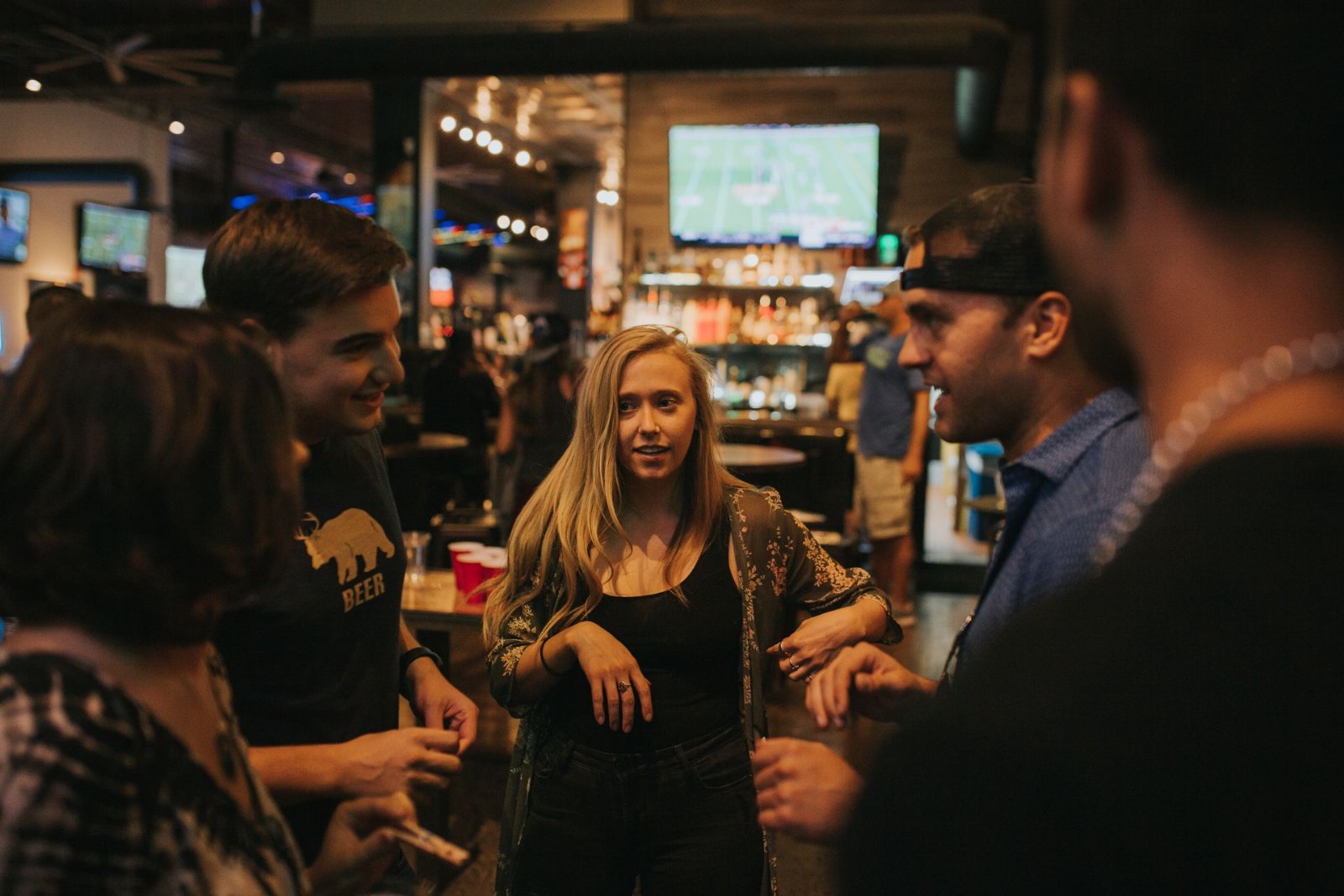
Most people think of bar crawls as purely social events — a fun way to explore new venues, meet interesting people, and enjoy a night out with friends. But there’s a surprisingly practical benefit hiding beneath all the good times: bar crawls can actually sharpen your sense of direction and improve your spatial navigation skills. If you’ve ever wandered through Portland’s eclectic neighborhoods on a guided bar crawl and found yourself instinctively knowing which way to turn, you’ve already experienced this phenomenon firsthand.
Portland, Oregon is one of the most walkable and navigationally rich cities in the Pacific Northwest. With its vibrant Pearl District, the bustling streets of the Alberta Arts District, and the iconic bar scene along NW 23rd Avenue, the city offers an ideal urban landscape for developing real-world navigation abilities. Whether you’re a Portland native or a curious visitor, joining a structured bar crawl — like those organized by Barcrawlerz — can do more for your brain than you might expect.
The Surprising Connection Between Bar Crawls and Spatial Intelligence
Spatial intelligence is the cognitive ability to understand, remember, and navigate physical spaces. It’s the same mental faculty that helps architects design buildings, surgeons perform precise procedures, and everyday people find their way home without GPS. Researchers have long known that active exploration of physical environments strengthens spatial cognition — and bar crawls, it turns out, are a remarkably effective form of that exploration.
When you participate in a bar crawl, you’re not passively riding in a car or following a single straight path. You’re walking through city blocks, turning corners, crossing streets, and mentally connecting one location to another. Each venue becomes a landmark, and the route between them becomes a mental map that your brain is actively building in real time.
“Active navigation — moving through space under your own power and making directional decisions — is one of the most effective ways to build lasting spatial memory. Every new route you walk becomes part of your internal map of the world.”
Why Urban Exploration on Foot Builds Better Mental Maps
There’s a fundamental difference between how your brain processes a route when you’re walking versus when you’re riding in a vehicle or following a GPS. When you walk, your brain engages a network of neurons called place cells and grid cells in the hippocampus — the region most associated with memory and spatial navigation. These cells fire in patterns that correspond to your physical location and movement, essentially drawing a real-time map of your environment.
Bar crawls in Portland are uniquely well-suited to this kind of mental mapping. The city’s grid-based street layout in areas like the Pearl District makes it easy to develop a strong sense of cardinal direction, while the more winding streets of neighborhoods like Hawthorne and Sellwood challenge your brain to adapt and build more complex spatial models.
Landmarks as Memory Anchors During Bar Crawl Navigation
One of the key mechanisms behind improved navigation during bar crawls is the use of landmarks. When you walk from one bar to the next, you naturally begin to associate specific visual cues — a mural, a food cart pod, a distinctive building facade — with your position in the city. These landmarks serve as memory anchors, helping your brain stitch together a coherent mental map of the area.
Portland is particularly rich in visual landmarks. The iconic “Keep Portland Weird” signage, the colorful street art in the Pearl District, and the distinctive architecture of venues along Mississippi Avenue all provide excellent anchor points for spatial memory. When Barcrawlerz leads a group through these neighborhoods, participants are unconsciously cataloguing dozens of these visual reference points throughout the evening.
The Role of Social Navigation in Spatial Learning
Bar crawls are inherently social events, and that social dimension actually enhances spatial learning. When you’re navigating with a group, you naturally discuss directions, debate shortcuts, and share observations about the environment. This verbal reinforcement of spatial information strengthens the neural pathways associated with navigation and memory.
Studies in cognitive science have shown that people who discuss routes and directions while traveling remember those routes significantly better than people who navigate in silence. The social chatter of a bar crawl — “Wait, didn’t we pass that food truck earlier?” or “I think the next bar is just around this corner” — is doing real cognitive work beneath the surface.
Portland’s Neighborhoods: A Natural Classroom for Urban Navigation
Not every city is equally well-suited for developing navigation skills through bar crawls. Portland happens to be exceptional in this regard. The city’s distinct neighborhoods each have their own character, layout, and navigational challenges, making a multi-neighborhood bar crawl a genuinely enriching spatial experience.
The Pearl District: Grid Navigation and Landmark Recognition
The Pearl District offers a clean, grid-based street layout that’s perfect for beginners developing their sense of direction. The numbered streets run north-south, while named streets run east-west, creating a logical system that’s easy to internalize. A bar crawl through the Pearl helps participants develop a foundational understanding of Portland’s street logic, which then transfers to other parts of the city.
Alberta Arts District: Complex Routing and Discovery
Alberta Arts District presents a more complex navigational environment. The neighborhood’s mix of residential streets, one-way traffic patterns, and densely clustered venues requires more active mental mapping. Navigating this area on a bar crawl forces your brain to work harder, building more robust spatial skills in the process. The vibrant murals and unique storefronts along Alberta Street make for excellent landmark anchors.
NW 23rd Avenue and the Alphabet District
The Alphabet District — so named because its streets are alphabetically arranged — is one of Portland’s most navigationally intuitive neighborhoods. A bar crawl along NW 23rd Avenue teaches participants to use alphabetical street names as a directional tool, a skill that’s immediately transferable to other parts of the city and even to other cities with similar layouts.
How Barcrawlerz Enhances the Navigation Experience in Portland
Not all bar crawls are created equal when it comes to spatial learning. A well-organized bar crawl with thoughtful routing and knowledgeable guides can dramatically enhance the navigational benefits of the experience. This is where Barcrawlerz stands out as a premier option for Portland bar crawl enthusiasts.
Barcrawlerz designs its routes with both entertainment and exploration in mind. Rather than taking the most direct path between venues, the organization crafts routes that expose participants to a variety of streets, intersections, and neighborhood features. This deliberate approach to routing maximizes the spatial learning opportunities embedded in each crawl.
“The best bar crawl routes aren’t just about getting from Point A to Point B — they’re about immersing participants in the full texture of a neighborhood, giving them a genuine sense of place that stays with them long after the evening ends.”
Barcrawlerz guides are also trained to point out notable landmarks, share neighborhood history, and encourage participants to take note of their surroundings. This guided attention to the environment accelerates the spatial learning process and makes the experience far more memorable — in more ways than one.
Practical Tips for Maximizing Navigation Skills During a Bar Crawl
If you want to get the most out of your next Portland bar crawl in terms of spatial skill development, there are several practical strategies you can employ throughout the evening.
Leave Your GPS at Home (At Least for Part of the Night)
This might sound counterintuitive, but relying on GPS navigation actually suppresses the brain’s natural spatial processing systems. When you follow turn-by-turn directions from your phone, you’re outsourcing the navigational work to your device rather than building your own mental map. Try navigating at least one leg of the bar crawl without digital assistance — you’ll be surprised how quickly your brain rises to the challenge.
Identify Three Landmarks at Each Venue
Before leaving each bar, take a moment to identify three distinct landmarks visible from the entrance. These might be a distinctive building across the street, a piece of public art, or even a uniquely shaped tree. Mentally note how these landmarks relate to the direction you came from and the direction you’ll be heading next. This simple exercise dramatically accelerates the formation of spatial memory.
Verbalize Your Route
As you walk between venues, narrate your route to a friend or simply to yourself. Say things like, “We’re heading north on NW 21st, and we’ll turn east on Burnside.” Verbalizing spatial information reinforces it in memory and helps you build a more durable mental map of the area.
Draw a Rough Map at the End of the Night
After the bar crawl concludes, try sketching a rough map of the route from memory. This doesn’t need to be accurate or to scale — the act of drawing the map is what matters. Research shows that sketching remembered routes significantly strengthens spatial memory and helps consolidate the navigational learning from the evening into long-term memory.
The Long-Term Benefits of Regular Urban Exploration Through Bar Crawls
The navigation benefits of bar crawls aren’t limited to the night itself. Regular participation in urban exploration activities — including organized bar crawls — produces measurable long-term improvements in spatial cognition. People who frequently explore new urban environments on foot tend to develop larger and more detailed cognitive maps, better distance estimation abilities, and greater confidence in unfamiliar environments.
In a city like Portland, where new neighborhoods, pop-up venues, and evolving streetscapes are constantly emerging, there’s always something new to discover and map. Each bar crawl with Barcrawlerz is an opportunity to expand your mental model of the city, adding new layers of spatial detail to your internal map of Portland.
Over time, regular participants in Portland bar crawls often report a heightened awareness of their surroundings in everyday life — noticing architectural details they previously overlooked, developing a stronger intuitive sense of direction, and feeling more comfortable navigating unfamiliar parts of the city without digital assistance.
Bar Crawls as a Gateway to Deeper Neighborhood Discovery
Beyond the navigation benefits, bar crawls serve as an excellent introduction to Portland’s diverse neighborhoods. Many participants discover venues, streets, and community spaces during bar crawls that they return to independently in the weeks and months that follow. This ongoing exploration further reinforces spatial learning and deepens participants’ connection to the city.
Barcrawlerz has introduced thousands of Portland residents and visitors to corners of the city they might never have explored on their own. By creating structured but adventurous routes through the city’s most interesting neighborhoods, the organization acts as a catalyst for the kind of active urban exploration that builds both social connections and spatial intelligence.
Conclusion: More Than Just a Good Time
Bar crawls in Portland are genuinely fun social experiences — but they’re also something more. When you walk through the Pearl District, navigate the winding streets of Hawthorne, or explore the vibrant corridor of Alberta Arts District on a Barcrawlerz event, you’re doing real cognitive work. You’re building mental maps, strengthening spatial memory, and developing a more intuitive sense of direction that will serve you well beyond the night itself.
So the next time someone suggests a bar crawl, say yes — and pay attention to where you’re going. Your brain will thank you for it, and so will your sense of direction the next time you find yourself navigating Portland without a map. With Barcrawlerz as your guide, you’ll discover that getting from bar to bar is only half the adventure. The other half is the city itself, waiting to be explored, remembered, and mapped — one block at a time.